



 Summer
is over, but we are trying to squeeze a few more butterfly days out like
we would force toothpaste out of the tube. It was fun, but the
butterfly season does not last forever. It could be over in a few
days or it could linger on for a couple of months. The end of the
butterfly season does not have the same fanfare as the start of it.
The first butterfly of the year is almost always noted and is a sign of
warmer weather to come. The last butterfly might be noticed, but
the realization that it was the final one might not be recognized for a
few days.
Summer
is over, but we are trying to squeeze a few more butterfly days out like
we would force toothpaste out of the tube. It was fun, but the
butterfly season does not last forever. It could be over in a few
days or it could linger on for a couple of months. The end of the
butterfly season does not have the same fanfare as the start of it.
The first butterfly of the year is almost always noted and is a sign of
warmer weather to come. The last butterfly might be noticed, but
the realization that it was the final one might not be recognized for a
few days.Butterflies will continue to fly in good numbers until the first frost. Cabbage white and orange and clouded sulfurs should continue. Eastern tailed-blues will still be present, but they are small and easily overlooked. Watch also for gray hairstreaks--while they are never common, they reach their highest populations late in the year.
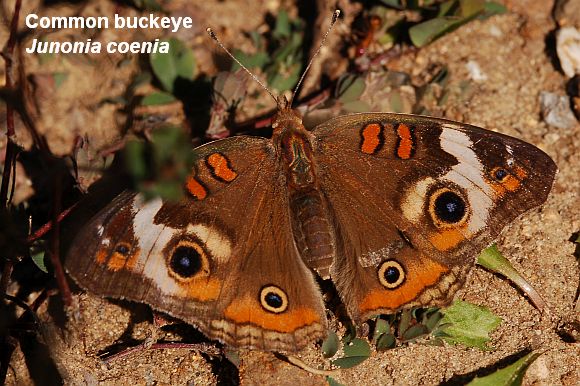
Migratory butterflies like monarchs, red admirals, painted ladies, American ladies and common buckeyes will be past their peak populations but some stragglers will remain. Eastern commas can make an appearance very late in the year--they will be looking for the appropriate hiding places--under loose bark or deep in the leaf litter where they will spend the winter in the adult stage.
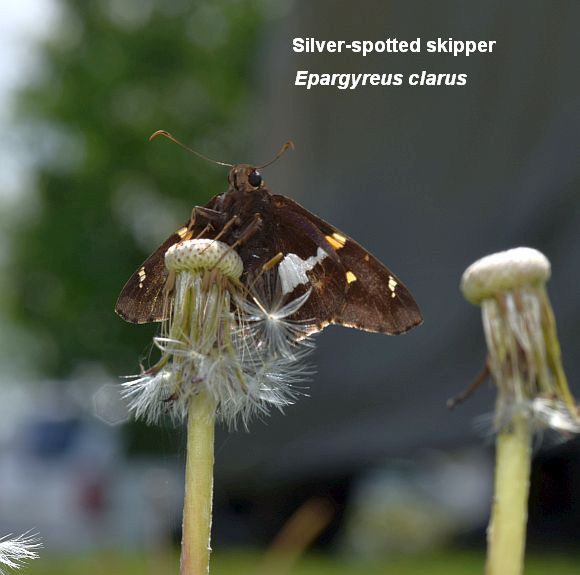
Silver-spotted skippers can persist until late in the year, but they often look very battered, with shiny tan bodies where the scales have worn off. Other skippers can be present, and usually look fresher. Look for sachem, Peck's skippers, tawny-edged skippers, least skippers, common checkered, and fiery skippers.
For some reason I have been thinking a lot lately about an offhand comment I made several years ago (OK, it was at least a decade ago). I thought it was pretty clever at the time, but it probably only demonstrated my lack of people skills. I had given a talk on Iowa's butterflies to a local garden club.
 After
the talk was over a gentleman who had seen it asked me something along
the lines of "Why are there butterflies?"
After
the talk was over a gentleman who had seen it asked me something along
the lines of "Why are there butterflies?" I'm not sure what the best answer to that question would have been. It might have been to note the benefits of pollination and how caterpillars provide food for birds. It might have required a deep dive into evolution. I am pretty sure that the right answer was not "Butterflies are here to provide entertainment for me." But that is the answer I gave him. I could tell by his face that he did not think I was as clever as I thought I was.
Butterflies provided a lot of entertainment for me this summer. I volunteered about two hours a week as a butterfly wing docent at Reiman Gardens--it was fun to watch how people interacted with butterflies. I also participated in the Iowa Butterfly Survey Network, also based out of Reiman Gardens. And I did my own version of a butterfly big year. I enjoyed doing this butterfly forecast.
The show is pretty much over for the year. Get out and be entertained by the butterflies while the weather is good. Visit Reiman Gardens and see the butterflies once the weather turns bad--you will enjoy it.
Until next year.....
Harlan Ratcliff
 Time
waits for no man and neither do the butterflies. We will soon see the
end of summer and shortly after that the end of the butterfly season.
By this time of year we are dealing mostly with butterflies that have
more than one generation per year, with the exceptions of
Leonard's skipper, which flies from late August and early September
in certain high-quality prairies, mostly in eastern or western parts of
the state, and of some of the larger brush-foot butterflies which emerge
earlier but which have longer adult lives than most other butterflies.
That last group includes the great-spangled fritillary, regal
fritillary, and common wood nymph.
Time
waits for no man and neither do the butterflies. We will soon see the
end of summer and shortly after that the end of the butterfly season.
By this time of year we are dealing mostly with butterflies that have
more than one generation per year, with the exceptions of
Leonard's skipper, which flies from late August and early September
in certain high-quality prairies, mostly in eastern or western parts of
the state, and of some of the larger brush-foot butterflies which emerge
earlier but which have longer adult lives than most other butterflies.
That last group includes the great-spangled fritillary, regal
fritillary, and common wood nymph.Eastern tiger swallowtail, giant swallowtail, and black swallowtail can persist into September, although their numbers won't be all that high. Watch for them especially on thistles.
Cabbage whites will be quite common. Orange sulfurs and clouded sulfurs are usually very common in September. They may still be among the most common butterflies this month, but their numbers seem to be greatly reduced from a more "normal" year. If you take lots of photos and can reference them by date you might want to look for seasonal morphology changes in the various sulfur butterflies. Late in the season there are often black or dark scales lightly mixed in with the yellow scales on the wings of these butterflies. The wings will still seem to be yellow, but they might look slightly darker or dirtier. Seasonal morphs can have subtle differences between early vs. later forms, but in some species the effect can be quite pronounced.
Look for little yellows anywhere you see partridge pea. Dainty sulfurs can normally be found in good numbers near the Des Moines River along Saylorville Reservoir but I have not seen any yet this year.
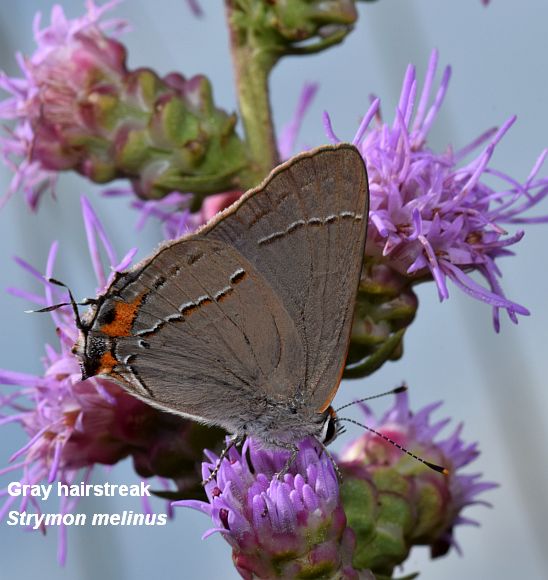
Eastern tailed-blues and summer azures will continue their flights throughout most of the month, with summer azures tapering off a little before the eastern tailed-blues. Watch for gray hairstreaks which can become fairly common late in the year.
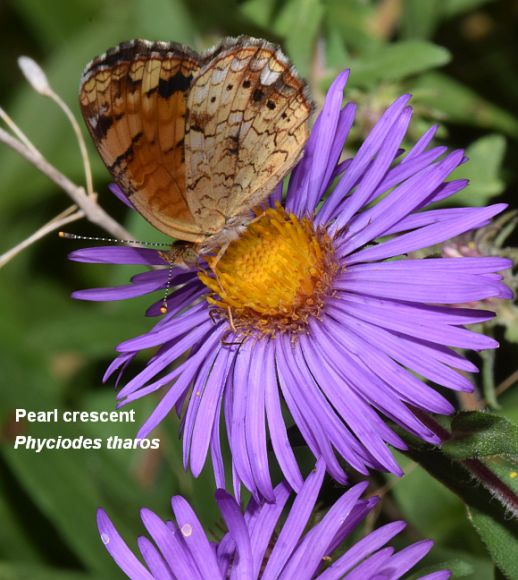
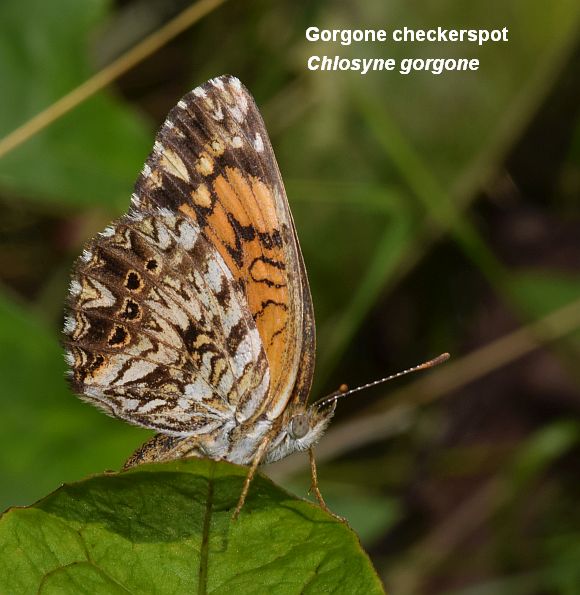
Pearl crescents and silvery and gorgone checkerspots will continue to be seen among the small asters that are common this time of year.
Butterfly migrations will start and they add to the excitement of butterfly watching.
 We
have several butterflies which have two-way migrations. Monarchs
are the most obvious because of their large size, but probably also
because they have communal roost sites. If you are lucky enough to
see a tree where migrating monarchs are roosting you are in for a treat.
Most rest with their wings closed, and the dull orange and black colors
can look like dead leaves. When one is disturbed, such as when
another individual flies in to find a resting spot, it will open its
wings. The upper surface looks significantly brighter so it is
almost like a flash of light. As the light dims at the end of the
day, the difference between the apparent intensity of the lower wings
versus the upper wings increases so the effect becomes greater.
But the butterflies become less likely to startle also. This show
has a special kind of magic.
We
have several butterflies which have two-way migrations. Monarchs
are the most obvious because of their large size, but probably also
because they have communal roost sites. If you are lucky enough to
see a tree where migrating monarchs are roosting you are in for a treat.
Most rest with their wings closed, and the dull orange and black colors
can look like dead leaves. When one is disturbed, such as when
another individual flies in to find a resting spot, it will open its
wings. The upper surface looks significantly brighter so it is
almost like a flash of light. As the light dims at the end of the
day, the difference between the apparent intensity of the lower wings
versus the upper wings increases so the effect becomes greater.
But the butterflies become less likely to startle also. This show
has a special kind of magic.Painted ladies, American ladies, red admirals, and common buckeyes have two-way migrations in Iowa. We might see temporary increases in their numbers over the next few weeks. I have had little luck attempting to find red admirals this year but there seem to be plenty of postings on iNaturalist. I am not sure why I am missing them. I have seen pretty good numbers of painted ladies recently, however.
Skippers are small and easily overlooked, but often have high numbers late in the year. Peck's skipper, tawny-edged skipper, common checkered skipper, and least skipper are present in pretty consistent numbers all summer. Sachem and fiery skipper can be more common in late September than the rest of the year.
Butterfly season goes by fast, along with the rest of the summer.
Get out while you can and enjoy it.
Harlan Ratcliff
 There
will be higher numbers of butterflies in flight than there were in July,
even though some of species are gone for the year. This seems to
be a fairly normal year for butterflies, but there are some slightly
unusual things happening. During a "normal" year in Iowa, orange
sulfurs, clouded sulfurs, and the hybrids between the two are extremely
numerous, often representing up to half of all butterflies seen.
This year their numbers are down, so that maybe only 15% of all
butterflies seen are represented by that group. Another normally
very common butterfly, the red admiral, seems to have reduced numbers
this year. The total number of butterflies is down, but the
reduction is caused by dips in the populations of a handful of
normally very common species.
There
will be higher numbers of butterflies in flight than there were in July,
even though some of species are gone for the year. This seems to
be a fairly normal year for butterflies, but there are some slightly
unusual things happening. During a "normal" year in Iowa, orange
sulfurs, clouded sulfurs, and the hybrids between the two are extremely
numerous, often representing up to half of all butterflies seen.
This year their numbers are down, so that maybe only 15% of all
butterflies seen are represented by that group. Another normally
very common butterfly, the red admiral, seems to have reduced numbers
this year. The total number of butterflies is down, but the
reduction is caused by dips in the populations of a handful of
normally very common species. A couple of species are present in higher numbers than normal. A skipper called the sachem and the American snout have both been seen in larger than normal numbers recently. Both of these species are considered occasional strays, coming into Iowa from states to the south of us, and often only showing up in small numbers in September. American snouts are adapted to desert conditions on the hackberry species they use for caterpillar hosts. They can have extreme population fluctuations, called irruptions, like we have seen here recently with hackberry emperors. This is fairly normal in Texas, but in Iowa we usually only see a few individuals each year. With the early sightings of good numbers this year I wonder if we might be due for an irruption of American snouts.
Eastern tiger swallowtails, giant swallowtails, and black swallowtails are all common enough and large enough that you should be able to see them at times. Watch for them visiting large flowers like purple coneflowers or mudding alongside damp gravel roads. There have been occasional sightings of zebra swallowtails in central Iowa but mostly they are butterflies of the southeast and southwest corners of the state.
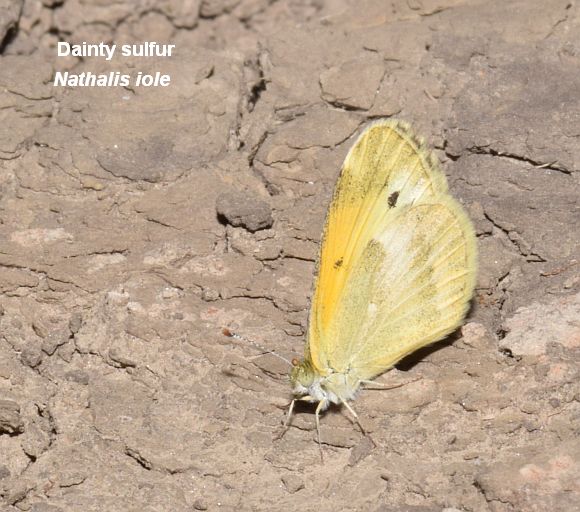 Cabbage
whites and clouded/orange sulfurs are very common and hard to miss, but
you should look for other members of the Pieridae (whites and yellows)
that are a little less common. Little yellows are smaller and are
often found near stands of their host plant, partridge pea. Dainty
sulfurs are even smaller and can sometimes be found in pretty good
numbers along the Des Moines River floodplain areas.
Cabbage
whites and clouded/orange sulfurs are very common and hard to miss, but
you should look for other members of the Pieridae (whites and yellows)
that are a little less common. Little yellows are smaller and are
often found near stands of their host plant, partridge pea. Dainty
sulfurs are even smaller and can sometimes be found in pretty good
numbers along the Des Moines River floodplain areas.The most common blue butterflies are either summer azures or eastern tailed-blues. There have been some sightings of Reakirt's blue, Melissa blue, and marine blue recently, so watch for them as well. Gray hairstreaks can look a little like eastern-tailed blues, especially in flight, but they are noticeably larger.
Great spangled fritillaries continue to be showy visitors to flowers. Watch for silvery checkerspots, pearl crescents, and gorgone checkerspots. Red-spotted purples, viceroys, and monarchs are among the large showy brushfoot butterflies that can be seen in August. You might see eastern commas or question marks mudding along the roadsides.
Silver-spotted skippers will continue to be present through most of the month. Peck's skippers, common checkered skippers, sachems, and fiery skippers should also be present in some numbers.
August can be a busy time, with people rushing to get the last bit of summer celebration in before fall. Make sure you get out and enjoy it while you can.
Harlan Ratcliff
 The
butterfly season is in full swing and I find myself obsessed with the
chase. I only have a short time to find a butterfly I have seen in
the past and take a better picture. I spend a lot of time checking
out stands of common milkweed. There is a particular patch in
Rolling Thunder Prairie that is in the middle of poison ivy, wild
parsnip, and giant ragweed. The first two can cause painful
blisters if you are not careful. But if you watch closely you can
see dun, Delaware, crossline, tawny-edge, little glassywing, and
two-spotted skippers. Banded hairstreaks, great spangled
fritillaries, orange sulfurs, monarchs, question marks, and gray
hairstreaks are also possible. And common milkweed also has a
wonderful scent that wafts around during the search.
The
butterfly season is in full swing and I find myself obsessed with the
chase. I only have a short time to find a butterfly I have seen in
the past and take a better picture. I spend a lot of time checking
out stands of common milkweed. There is a particular patch in
Rolling Thunder Prairie that is in the middle of poison ivy, wild
parsnip, and giant ragweed. The first two can cause painful
blisters if you are not careful. But if you watch closely you can
see dun, Delaware, crossline, tawny-edge, little glassywing, and
two-spotted skippers. Banded hairstreaks, great spangled
fritillaries, orange sulfurs, monarchs, question marks, and gray
hairstreaks are also possible. And common milkweed also has a
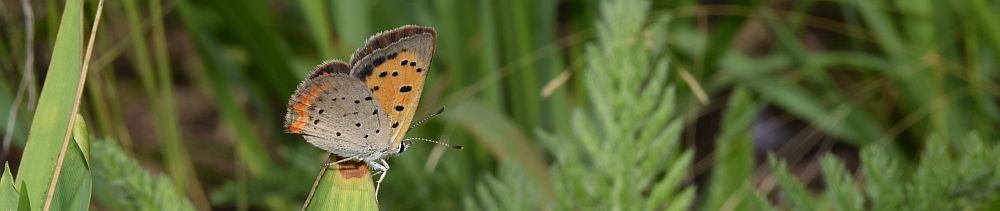
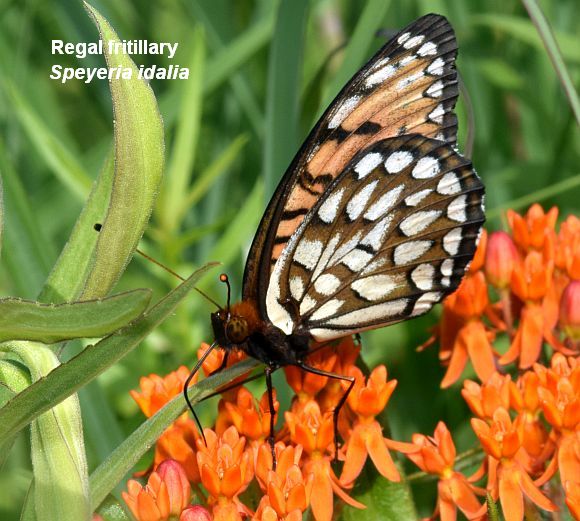
wonderful scent that wafts around during the search.A short distance away is an area with shorter grasses, with brightly colored butterfly milkweed scattered all over. It is also highly attractive to butterflies, but seems to attract a different set of butterflies. Some are the same, such as the great spangled fritillaries and monarchs. However gray coppers, coral hairstreaks, pearl crescents, and gorgone checkerspots seem more attracted to the butterfly milkweed than the common. Maybe it has something to the general height of the surrounding vegetation, or maybe it is just the attractiveness of the different milkweeds to different species. Regal fritillaries can be found on this prairie occasionally as well, and they sometimes visit the butterfly milkweed. They are large butterflies and do not stay for very long on an individual flower. My attempts at photography require me to get fairly close to the butterfly--ideally within a couple of feet. That can be a bit of a problem when they don't stay on the flower for long. While this area of the prairie is not populated by wild parsnip, it does have a good population of wild raspberries. They are at best a tripping hazard, and at their worst they tear at the flesh of my legs as I chase the regal from one patch of butterfly milkweed to the next.
There are butterflies in this prairie that don't seem to visit flowers at all, or at least only rarely. Common wood-nymphs can be the most common butterflies in the prairie, at least for a few weeks in July.
Prairies are not the only places to find butterflies, however. Gravel and dirt roads or parking lots, especially after rain can be great for butterflies. If you are new to having an interest in butterflies you might not be aware of the behavior called "mudding" or "mud puddling." Butterflies find a damp spot on the ground, often near mud puddles, and sip water. Most of the butterflies that do this are males. If you look closely at them you might see little drops of water released from the end of their abdomens. They collect minerals from the water and the minerals are transferred to the female during mating.
So the gravel roads that are found all over Iowa, especially if they are adjacent to good habitat--prairies, woodlands, wetlands, rivers--can be magical places to look for butterflies.
So you walk down this lightly traveled road. Adjacent to the road are flowers that are often ignored or considered weeds. They include hoary overlain, wild bergamot, and whorled milkweed. Those flowers are attractive to butterflies of all kinds. Black swallowtails chase each other and disappear into the distance. Peck's, tawny-edge, and common sooty-wing skippers visit the hoary vervain. Maybe you will see fiery skippers or sachems, although they usually don't show up until later.
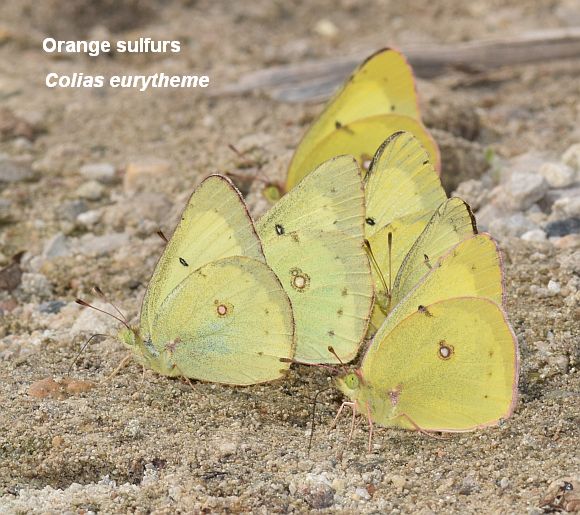
Follow the gravel road to where it intersects with another. In the ditch is a culvert with sand that has washed off of the road. On that damp sand are hundreds of orange sulfurs. Other species are there as well, and they sort of segregate themselves. The three or four common checkered skippers will be next to each other. The pearl crescents will be next to each other as well. In the distance you see a cloud of dust and hear the pickup coming. It takes a minute or two for the truck to drive on past (wave--you are in Iowa, after all), and as it does the orange sulfurs rise in a group and fill the air. In a few minutes the butterflies settle back down, and the dust does as well.
Summer in Iowa. Enjoy it while it lasts.
Harlan Ratcliff
 The
butterfly season is a little delayed this year due to the unseasonably
cool May weather, but it should pick up noticeably really soon.
Numbers will start to rapidly increase, and will continue to increase
throughout the summer. Diversity--the numbers of individual
species that are possible to see--will also increase rapidly, and will
reach a peak by about mid-July.
The
butterfly season is a little delayed this year due to the unseasonably
cool May weather, but it should pick up noticeably really soon.
Numbers will start to rapidly increase, and will continue to increase
throughout the summer. Diversity--the numbers of individual
species that are possible to see--will also increase rapidly, and will
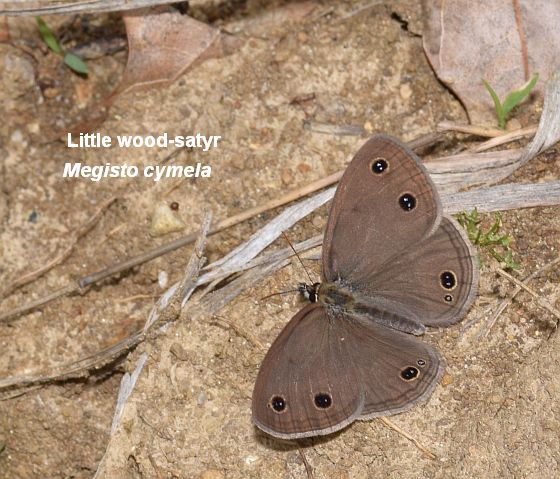
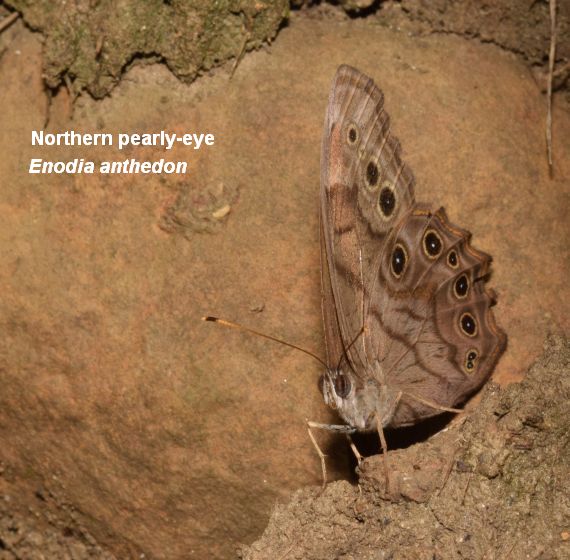
reach a peak by about mid-July.In my photos this month I am featuring a couple of butterflies that are fairly common in Iowa, but might be unfamiliar to most people. Both use grasses as caterpillar host plants, and they are both primarily butterflies of wooded areas. You normally won't see them on flowers. Instead, they seem to prefer to feed on tree sap, aphid honeydew, and rotting fruits.
I see little wood-satyr most often in areas where there is poison ivy. That includes lightly wooded areas where there are gaps in the leafy canopy that let light in. They have a kind of hopping flight, and they land on leaves that are close to the ground or on the ground itself. When they are on the ground they often sort of twitch--they do a little hop that is similar to what they do when they fly, but they land back down at a slight angle to their original location. They give the impression that they are easily spooked, and in fact they are quite difficult to sneak up on. I have seen this behavior in other species of satyr (little wood-satyr is the only one found in Iowa), but I have not seen it in most other butterflies.
Northern pearly-eye is found in wooded areas as well, but it spends most of its time perched high on the tree trunks where you are unlikely to see it. You will see them along the pathways or around waterways, however. They can be in areas that are fairly well shaded by the canopy of the trees. We used to get them on the walls near our porch light, which leads me to believe that they may fly in relatively dim light and may be attracted to lights at night. The eyed-brown is found in northern Iowa in areas with wetlands, and it looks similar but has four fairly uniform dark spots on the forewing.
 Back
yard butterflies include eastern
tiger swallowtail, black swallowtail and giant swallowtail and are all
common enough in central Iowa that they should be seen. Cabbage
whites, orange sulfurs, and clouded sulfurs will also be common.
Back
yard butterflies include eastern
tiger swallowtail, black swallowtail and giant swallowtail and are all
common enough in central Iowa that they should be seen. Cabbage
whites, orange sulfurs, and clouded sulfurs will also be common. Red admirals can take up residence and set up territories, chasing rivals away, often in the waning hours of the day.
There are usually a few places that I check for butterflies on a regular basis. Anywhere butterflies engage in mudding behavior is good, and the species composition can change on a regular basis. The edges of gravel or dirt roads, especially on a hot day after a thunderstorm are great places to find butterflies. I visit a couple of prairies on a regular basis, and often find some of the best butterflies on the roads or parking lots next to them, rather than on the prairies themselves. I have seen regal fritillaries mudding on the Rolling Thunder Prairie parking lot. Look for this butterfly in late June, but you do have to go to a pretty good prairie to find it.
Common milkweed and dogbane both can form large weedy clusters, and bloom for a few weeks from June into July. These flowers are highly attractive to pollinators of all types, but are especially good for hairstreaks and small skippers. Make a point of checking out these flowers on a regular basis and you should see banded hairstreak, Delaware skipper, crossline skipper, little glassywing, dun skipper, Peck's skipper, plus the larger showy butterflies like great spangled fritillary, painted and American ladies, monarch, viceroy, and even mourning cloak. Those flowers also attract some other neat pollinaters--weird-looking flies, soldier beetles, bees, snowberry clearwing (a moth), plus little moths that are mimics of wasps.
So get out and enjoy it while you can. Summer goes fast--don't miss it.
Harlan Ratcliff
 May
can be a frustrating time for butterfly watchers. There are always
cool, windy, cloudy days--almost but not quite butterfly days.
Then you get perfect days when other obligations keep you inside.
The diversity of the butterflies on the wing is fairly high, but the
overall numbers are low. (Look at the phenology chart on this
Insects of Iowa page). The numbers rapidly increase at the end of
the month and into June. Look at the phenology charts for species
like the
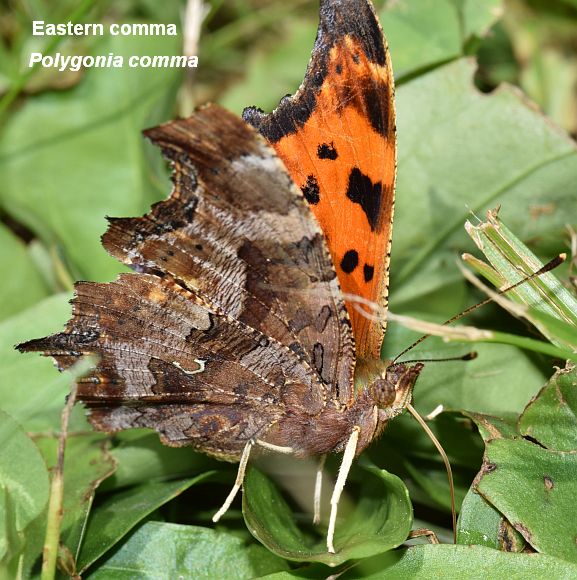
eastern comma and the
gray copper. Eastern comma has adults which emerge from their
over-winter aestivation and fly mostly in March and April, at which time
they mate and deposit eggs. There are three generations after
that. The broods sort of overlap--a butterfly you see in mid July
might be from the first or second generation. The gray copper has
only one generation. Both species can be present in May, but the
overwhelming numbers are present at other times. A lot of species
have a similar pattern. You can find them in May, but there are
many more in June or July or August.
May
can be a frustrating time for butterfly watchers. There are always
cool, windy, cloudy days--almost but not quite butterfly days.
Then you get perfect days when other obligations keep you inside.
The diversity of the butterflies on the wing is fairly high, but the
overall numbers are low. (Look at the phenology chart on this
Insects of Iowa page). The numbers rapidly increase at the end of
the month and into June. Look at the phenology charts for species
like the
eastern comma and the
gray copper. Eastern comma has adults which emerge from their
over-winter aestivation and fly mostly in March and April, at which time
they mate and deposit eggs. There are three generations after
that. The broods sort of overlap--a butterfly you see in mid July
might be from the first or second generation. The gray copper has
only one generation. Both species can be present in May, but the
overwhelming numbers are present at other times. A lot of species
have a similar pattern. You can find them in May, but there are
many more in June or July or August.As we start to live our lives outside more in the late spring and early summer, we do start to see butterflies more. Dandelions in our yard will attract red admirals, painted ladies, American ladies, and clouded sulfurs. If you have flowering trees you will bring in those butterflies plus eastern tiger swallowtails and giant swallowtails.
On the subject of swallowtails, the zebra swallowtail has breeding colonies on the southeastern corner of the state, in Shimek State Forest, and on the southwest, in Waubonsie State Park. This colorful butterfly uses the pawpaw tree as its caterpillar host plant. I have heard of efforts by individuals in this state to plant pawpaws in yards and other places in an attempt to attract zebras. I don't know if these are formal, documented efforts or just random acts, but last year and even 2020 had a fairly significant number of sightings of this beautiful butterfly in central Iowa. It would be interesting to see if this is a long term trend, or just short term random increases in the population size.
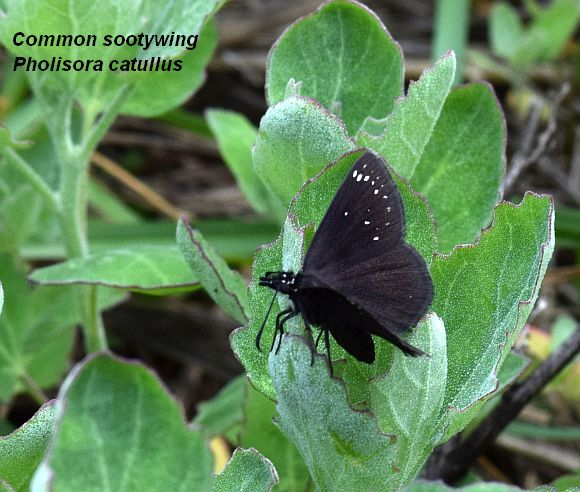 If
you watch closely you might be able to see some skippers.
Silver-spotted skipper is by far the largest and most showy of Iowa's
skippers. You might also see Peck's, tawny-edged, least, and
common checkered skippers. Common sootywing can sometimes be seen
as well.
If
you watch closely you might be able to see some skippers.
Silver-spotted skipper is by far the largest and most showy of Iowa's
skippers. You might also see Peck's, tawny-edged, least, and
common checkered skippers. Common sootywing can sometimes be seen
as well.Eastern tailed-blues should start showing up soon. Although they are widespread and common, and probably present in most yards they are small and easily overlooked. The small blue butterfly you see flying around and landing on low weeds and grasses is probably an eastern tailed-blue. If it flies up into the trees, it is more likely to be a summer azure.
You might be able to see the small hairstreak called Henry's elfin during the first week of May if you are lucky and live in an area where redbud grows wild. There is a generation of juniper hairstreak that peaks in mid-May. I have run across a couple of individuals of this butterfly in Dallas County, Iowa, but also spent a lot of time looking unsuccessfully for them. They are much more common in the loess hills area.
Get outside and keep your eyes open for butterflies. They are around now. The numbers really start picking up toward the end of the month, though.
Harlan Ratcliff
 Spring
seems to be here now. The calendar will make it official within a
few days. Butterfly season has started. Already there have
been a couple of sightings--an eastern comma on March 1 and a mourning
cloak on March 14, both posted to the Iowa Butterflies Facebook page.
iNaturalist had an interesting sighting of a cabbage white photographed
in Dubuque on January 25. I would assume that was an outlier, and
can only speculate on the conditions that would make its emergence
possible.
Spring
seems to be here now. The calendar will make it official within a
few days. Butterfly season has started. Already there have
been a couple of sightings--an eastern comma on March 1 and a mourning
cloak on March 14, both posted to the Iowa Butterflies Facebook page.
iNaturalist had an interesting sighting of a cabbage white photographed
in Dubuque on January 25. I would assume that was an outlier, and
can only speculate on the conditions that would make its emergence
possible.The first butterflies seen each year are usually those that overwinter as adults--mourning cloak and eastern comma are the most common, but gray comma and compton tortoiseshell are also possible.
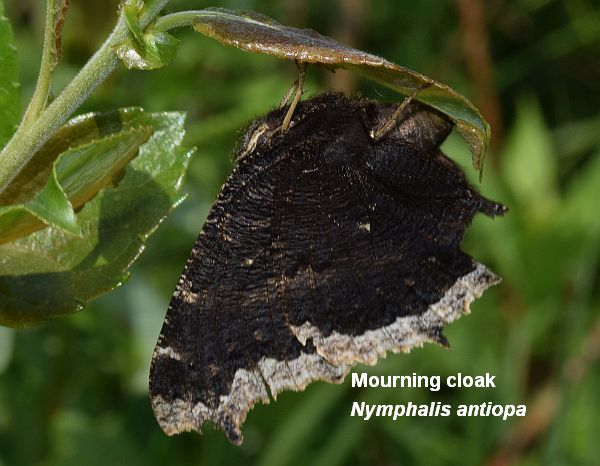
My photograph of the mourning cloak with her eggs was taken in July. They deposit up to 250 eggs at a time, usually clustered together around a stem, but also as in my photo under leaves. Larva grow together in a colony, and they and even the pupae twitch together when disturbed. (Scott, 1986). People who have raised this butterfly commercially tell me that this butterfly will feign death or "play possum" at times when disturbed.
As the season progresses we will start to see other species. By late March or early April we will start to see cabbage whites and black swallowtails, which over winter in the chrysalis stage. Red admirals show up fairly early as well. The bulk of the Red admirals in Iowa originate from individuals that migrate from locations south of us, but there seems to be evidence that some individuals over winter in Iowa as well, possibly in the chrysalis stage. Small numbers of red admirals can show up very early, with higher numbers showing up later on.
By mid April a number of species will be present, including painted ladies, American ladies, eastern tiger swallowtails, and spring azures.
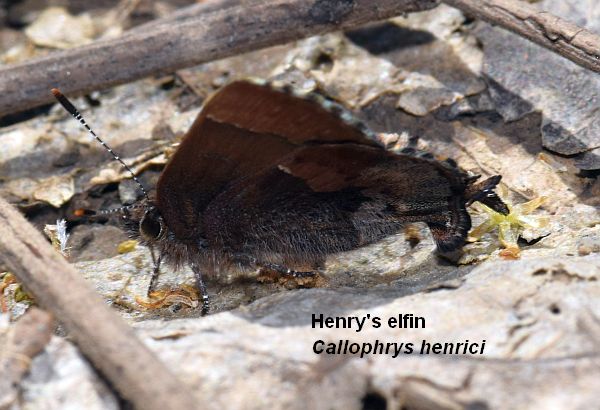
A special butterfly called Henry's elfin shows up in mid to late April. This is a small, easily overlooked butterfly that has a short flight time of one to two weeks. Its caterpillar host plant is redbud, and it seems only to be found where the host plant grows in nature--along river corridors in the southern third of the state. It is very small and dark, and you might mistake them for small skippers or even large flies until you get a good look at them. They can be present in high numbers and you won't notice them unless you are looking for them.
If you look closely at my photo you can see that the butterfly is leaning strongly to its left side. The wings are held together but are at about a 45 degree angle to the ground. There is a reason for this. Butterflies are cold blooded and need to heat up in order to fly. This individual is doing a behavior called lateral basking. It is holding its wings perpendicular to the sun so that it can warm up faster. I took the photo on a cool day--temperatures were in the high 50s to the low 60s but it was sunny. The basking behavior was very obvious. As the day warmed up the basking became a little less noticeable.
I have been doing this butterfly forecast for a number of years now. I hope I pass along a little bit of information about the butterflies, but I really want to pass along some of the passion I feel for them as well. And it is not just about the butterflies. Take a walk in the woods and smell the freshness of the damp leaves and mosses. Listen to the birds. Listen for frogs singing. Look for spring wild flowers--they will be up soon. Watch for butterflies while you are enjoying nature.
All the best.
Harlan Ratcliff